
Tiffany Farriss ’96: Leading with Curiosity
For Tiffany Farriss, leadership did not begin in a boardroom.
It began in a classroom.
It began with a question, a teacher who took the time to answer it, and a school that made space for curiosity to grow.
At Our Lady of the Elms School, that curiosity was not just encouraged. It was expected.
Today, Tiffany serves as CEO of Palantir.net, leading teams focused on agile strategy, open-source innovation, and building sustainable, inclusive workplaces. With more than 25 years of experience, she advises organizations worldwide and speaks at major conferences, including SXSW, DrupalCon, and OSCON.
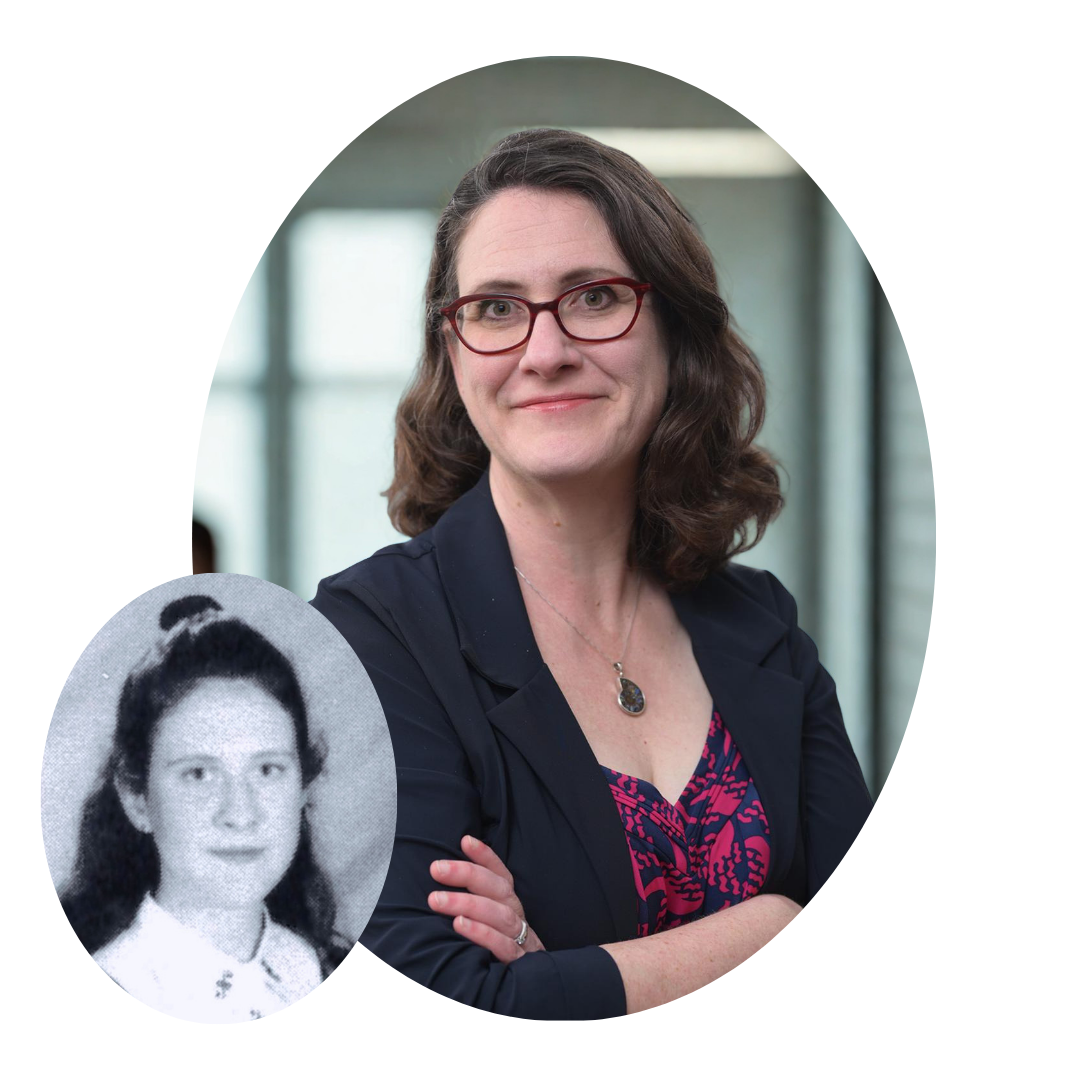
But when she reflects on the foundation of her leadership, she returns to something much simpler.
Teachers who saw her potential.
Experiences that challenged her to think differently.
A community that expected her to lead.
A School That Saw Possibility
At the Elms, Tiffany was a high-achieving student. A Valedictorian, National Merit Finalist, and active participant in everything from Speech and Debate to Latin Club, Academic Challenge, athletics, and the arts.
But what she remembers most is not the list of accomplishments.
It is the people behind them.
“The most defining thing about my experience was how much the teachers cared,” she says. “Most people are lucky if they have one teacher who changes their life, and I had several.”
That level of attention created something rare: an education shaped around the individual student.
One moment, in particular, would prove to be pivotal.
A Latin teacher encouraged Tiffany to pursue an independent study in the library, giving her the space to explore emerging internet technology and early web design. At the time, it was simply an opportunity to follow her interests.
Looking back, it was the beginning of her career.
“The Elms always found a way to support me,” she says. “They didn’t have to, but they did.”
That willingness to invest in students is where leadership begins.
Learning How to Think
Tiffany often describes her Elms education as transformative, not only because of its academic rigor, but because of the way it taught her to think.
A lesson from AP Biology has stayed with her for decades.
“It doesn’t actually matter how much you know,” she recalls being told. “What matters is knowing how to find information and judge whether it’s true.”
That idea, simple but powerful, continues to guide her leadership today.
In a world that is constantly changing, success depends on adaptability, critical thinking, and a willingness to keep learning. Those habits were formed early, in classrooms where questions were valued as much as answers.
Just as important was the environment in which she learned.
At the Elms, leadership took many forms, and every one of them was visible.
“The jocks were women, the geeks were women. Every version of leadership was female,” Tiffany says. “That kind of environment gives you a self-confidence you can’t put a price on.”
It is a confidence that stays with you.
A Career Shaped by Curiosity
After graduating from the Elms, Tiffany continued to follow her intellectual curiosity, studying mathematics and classics at Northwestern University.
Her career would take her to the intersection of technology, strategy, and social impact, where she found opportunities to solve complex problems and help organizations grow. Much of her work has focused on nonprofits and mission-driven organizations, aligning her professional path with a broader sense of purpose.
Over time, she stepped into leadership roles that allowed her to shape not only strategy, but culture.
As CEO of Palantir.net, she leads with a focus on learning, collaboration, and inclusion. She mentors teams, builds systems that support long-term success, and helps organizations navigate an increasingly complex digital landscape.
Her leadership is not defined by title alone.
It is defined by how she creates space for others to grow.
Leadership Rooted in Values
The way Tiffany leads today reflects the values she developed during her years at the Elms.
A commitment to mentorship.
A belief in lifelong learning.
A responsibility to use knowledge in service of others.
These are not ideas she adopted later in life. They are values that were modeled for her early and reinforced through experience.
They continue to shape how she approaches her work, her teams, and her impact on the world around her.
Carrying the Elms Forward
Nearly three decades after graduation, Tiffany remains closely connected to the lessons she learned as a student.
“The Elms gave me space to explore without gender expectations,” she says. “It allowed me to see every possibility, and to believe that I belonged in those spaces.”
That belief is powerful.
It is what allows young women to step into leadership with confidence, to take risks, and to pursue paths that may not yet be clearly defined.
For today’s students, her story is a reminder that leadership does not begin later.
It begins now, in the questions they ask, the risks they take, and the confidence they build over time.
Developing Women Leaders
Tiffany’s story is not just about a career in technology.
It is about curiosity.
It is about confidence.
It is about the courage to explore and the discipline to lead.
At Our Lady of the Elms School, these qualities are not left to chance.
They are developed, day by day, in classrooms where students are known, challenged, and encouraged to lead.
“The Elms always found a way to support me. They didn’t have to — but they did.”